 ← Know the Leaf
The biggest myth in the humidor is that a darker cigar is a stronger cigar. It is false — and tonight the house takes it apart.
Walk into any humidor and your eye goes to the dark ones first. Something in us reads a black, oily wrapper as danger — a smoke that will put you flat on your back. So the newcomer reaches past the espresso-colored beauty and picks something pale and “safe.”
He has it backwards. That dark leaf is very often the gentler smoke of the two. The color you are afraid of is not strength at all — it is fermentation, sweetness, and patience. Let the house show you the difference between what a cigar looks like and what it actually is.
Most of the confusion comes from collapsing three separate ideas into a single glance. Color is how dark the wrapper looks. Body is how rich and full the smoke feels on the palate. Strength is nicotine — the kick. They are not the same measurement, and a cigar can score high on one and low on another.
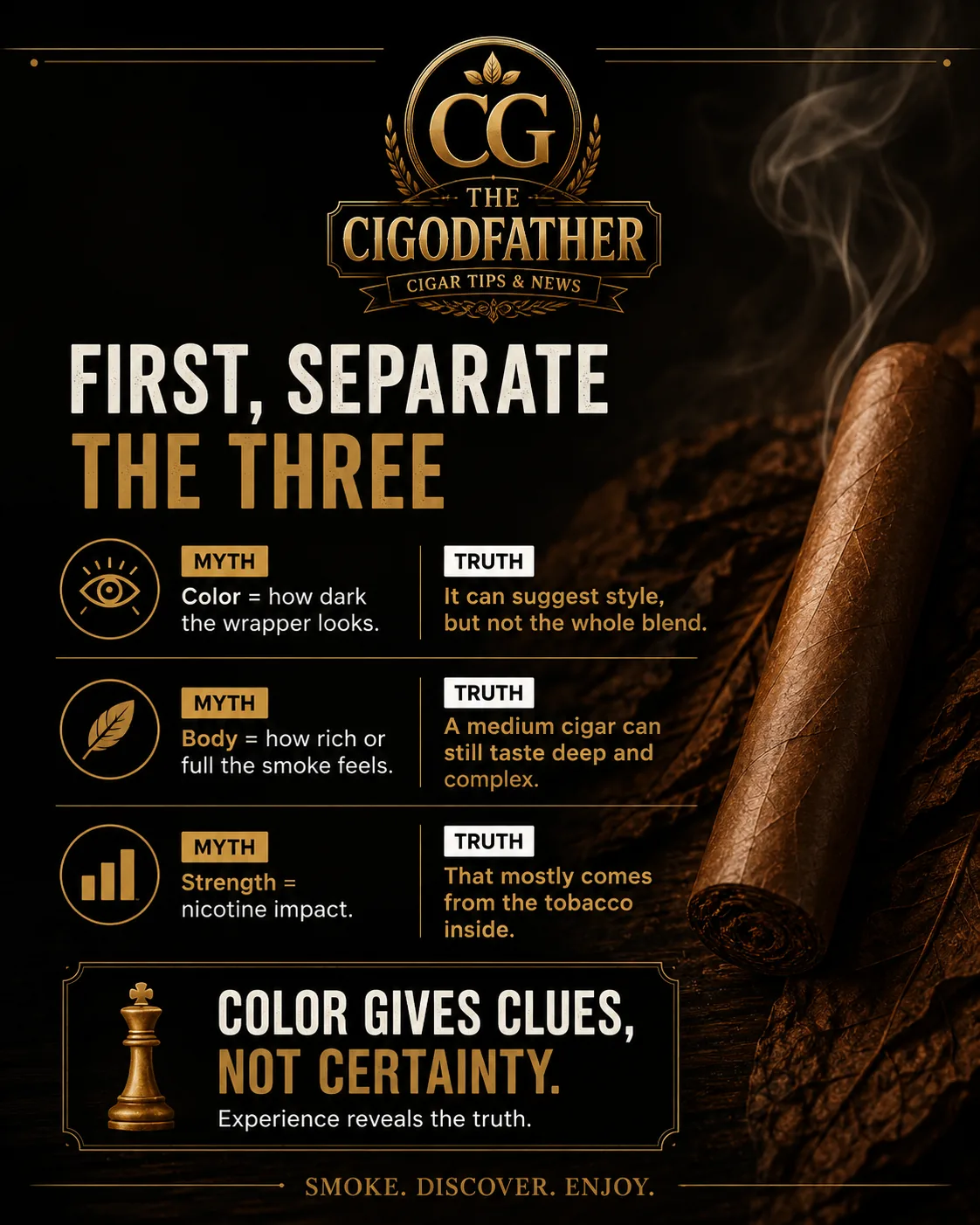
Once you keep those three apart, the myth has nowhere to hide. A medium cigar can taste deep and complex. A pale wrapper can sit over a filler that hits like a freight train. The eye simply cannot read nicotine.
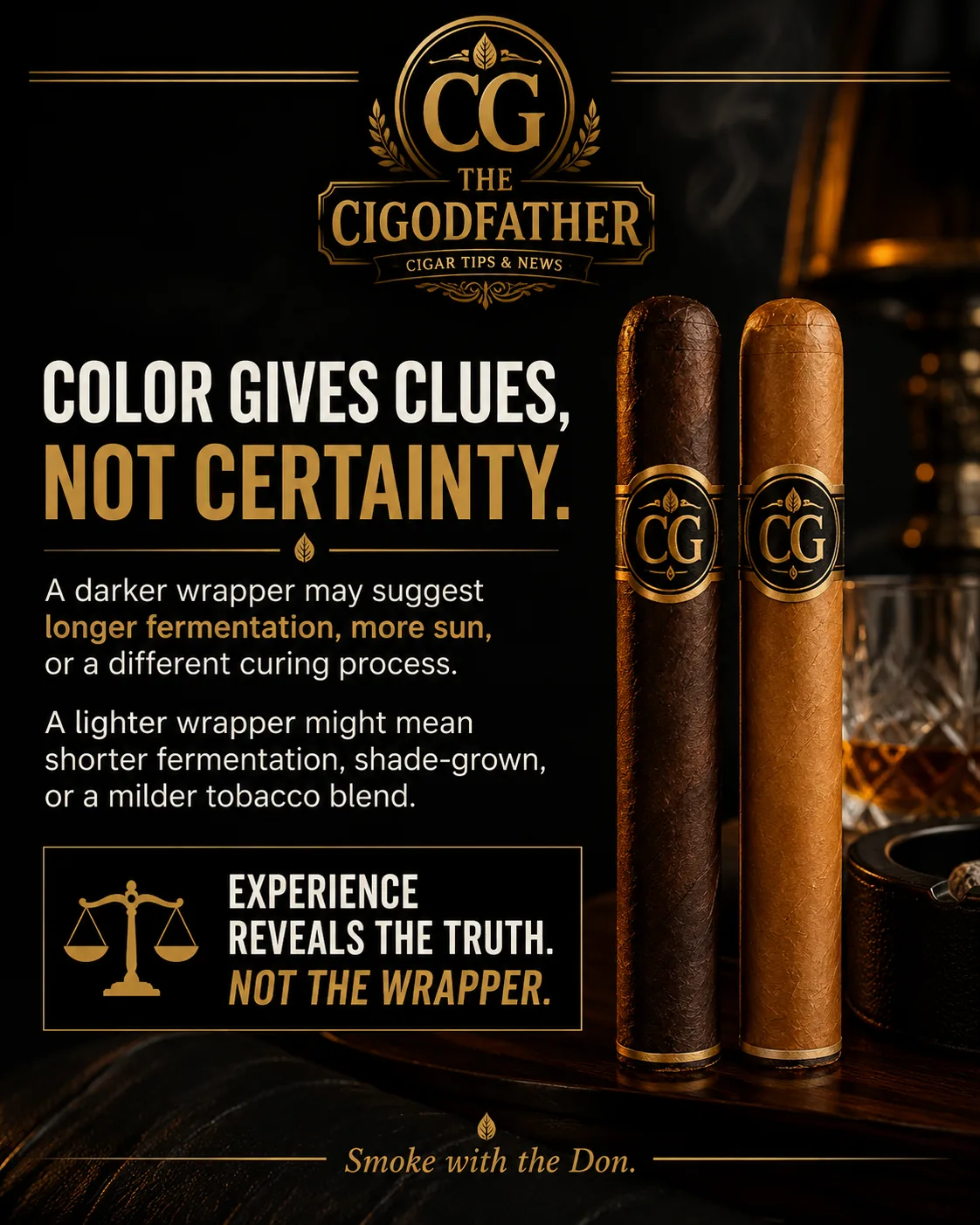
This is not the house telling you color means nothing. It means plenty — just not what most people think. A darker wrapper may point to longer fermentation, more time in the sun, or a different curing method. A lighter wrapper may mean shorter fermentation, shade-grown leaf, or a milder blend. Those are honest signals about flavor and style. Read them as a hint about the experience, then let the smoke itself confirm or deny.
So when a darker shade catches your eye, it is fair to expect a certain direction — a leaf that was grown, cured, fermented and aged toward richness, especially in the maduro styles.
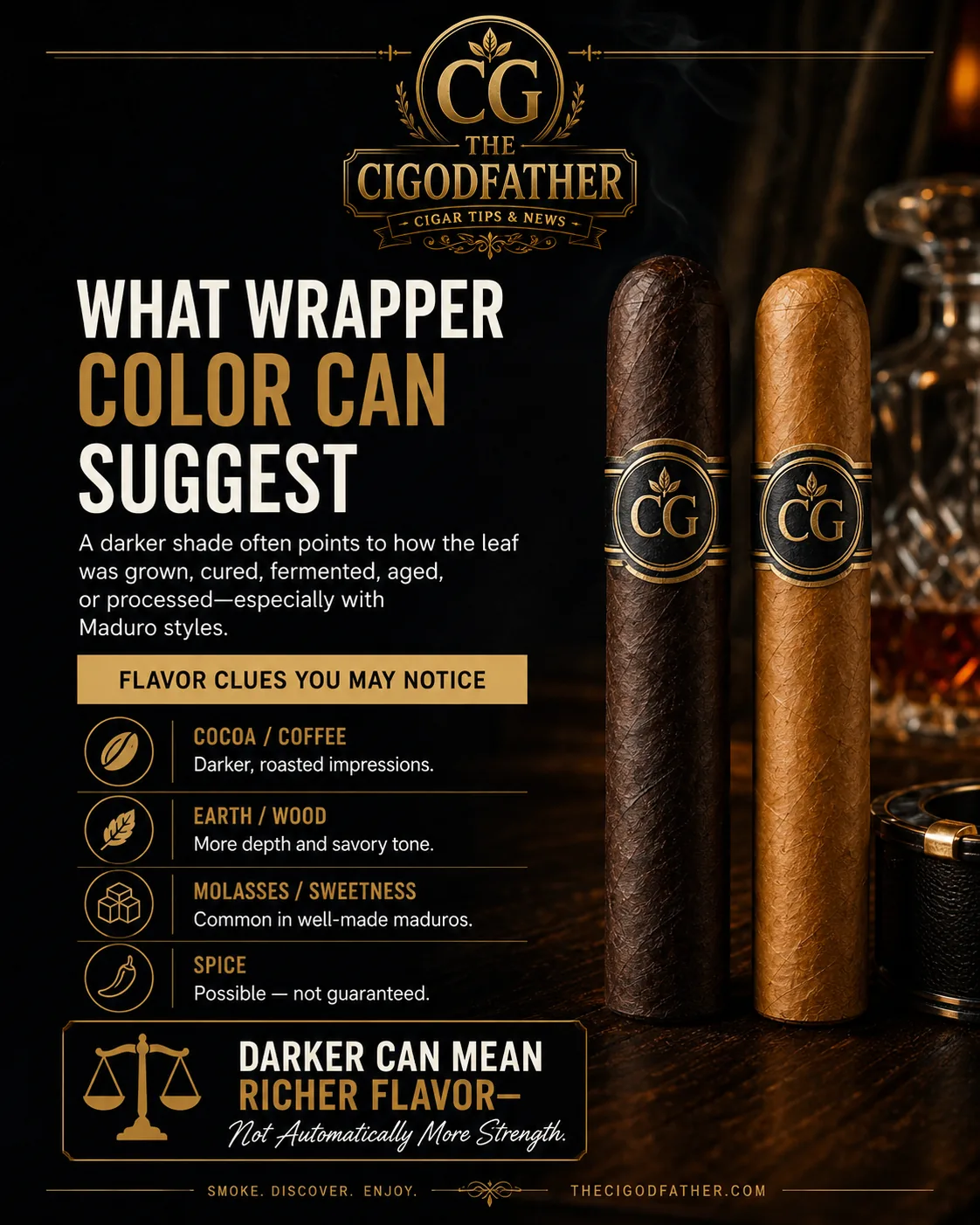
Cocoa and coffee. Earth and wood. A molasses sweetness in a well-made maduro. Maybe a little spice, maybe not. Those are the gifts a dark wrapper tends to bring. Notice that not one of them is “more nicotine.”
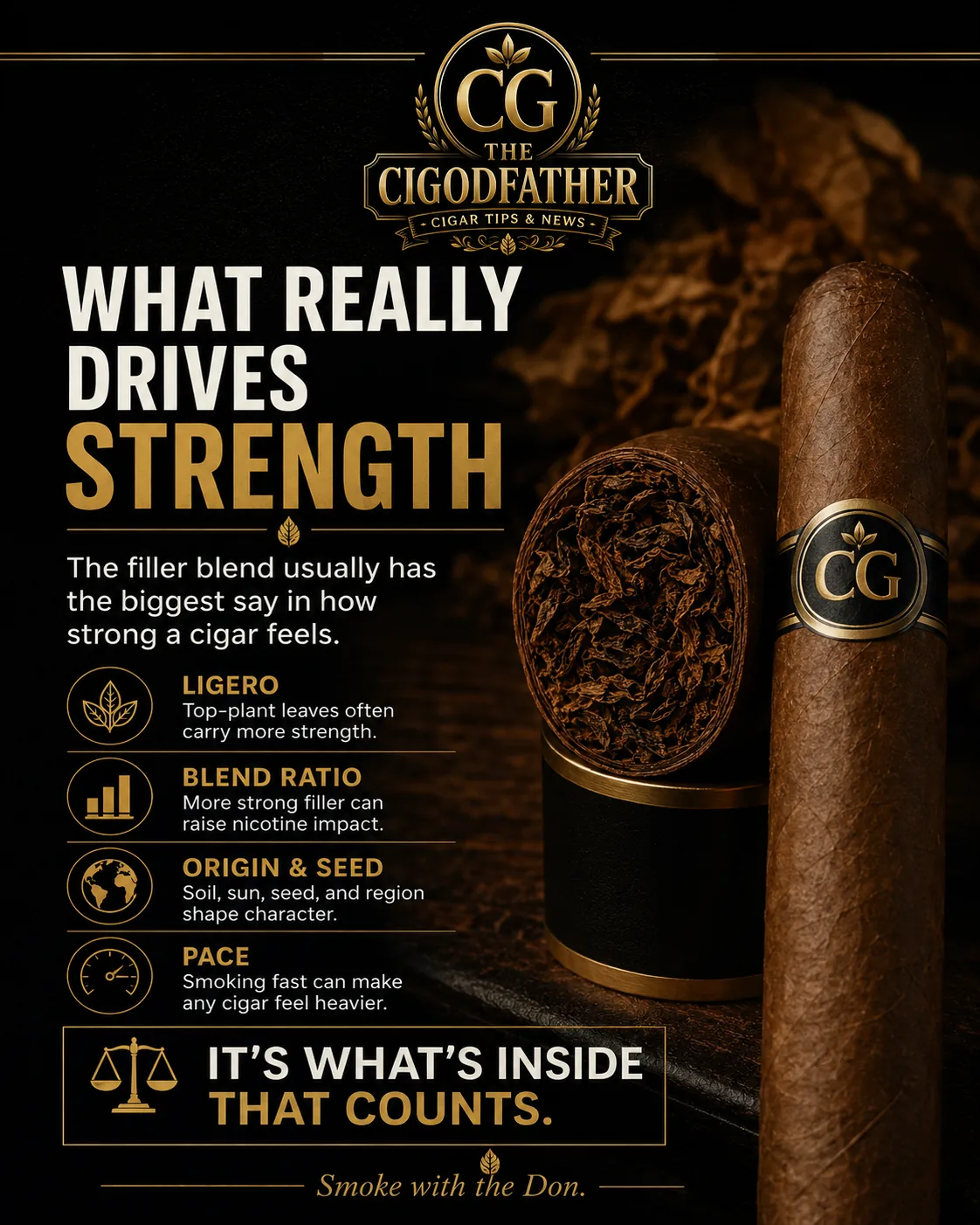
If you want to know how hard a cigar will hit, stop looking at the outside and think about the inside. The filler blend has the biggest say in strength. Ligero — the leaves from the top of the plant that drink the most sun — carry the most power. The more of that strong filler in the recipe, the higher the nicotine impact. Origin and seed shape the character. And your own pace matters too: smoke any cigar too fast and you will make it feel heavier than it is.
Here is the part that undoes the myth completely: the long fermentation that turns a wrapper dark actually lowers the wrapper’s own nicotine while it sweetens the leaf. So a coal-black maduro can easily be milder than a golden Connecticut sitting over an aggressive ligero core. The scary-looking one is frequently the mild one.
Now — do not go too far the other way and decide the wrapper is decoration. It is your first impression, and it strongly shapes aroma, flavor, mouthfeel and burn. The wrapper sets the tone. The binder holds the construction together and supports the blend. The filler carries the strength and the core identity. Three parts, three jobs.
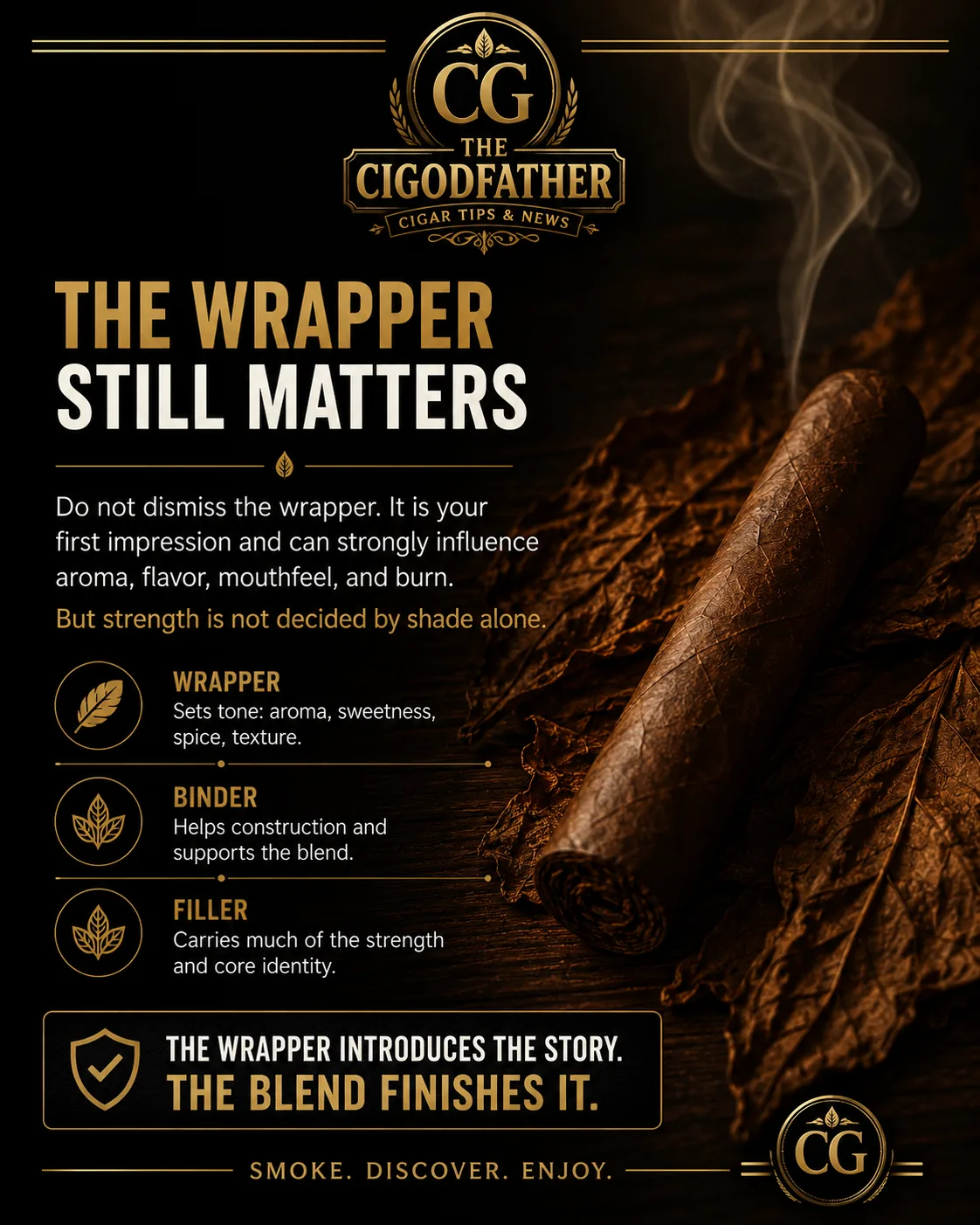
Think of it the way you would a great opening line. The wrapper introduces the story — but the blend inside is what finishes it.
Put two sticks side by side. The dark one can smoke smooth and medium. The pale one can come at you bold and full. Same shelf, opposite expectations — and the only way to know for certain is to light them.
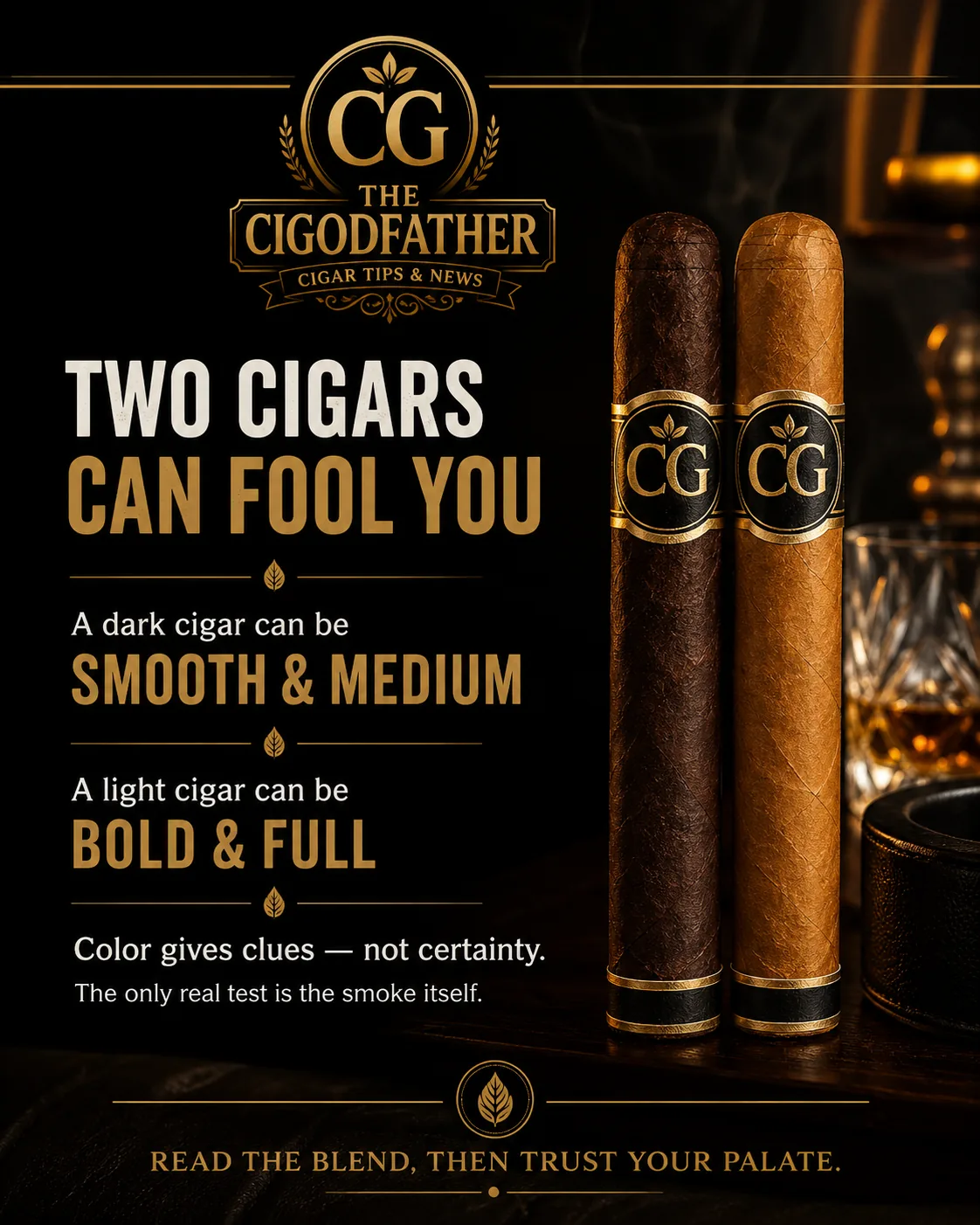
The eye picks the cigar. The palate learns the truth. Only one of them has ever been right. — The Cigar Don
A myth this stubborn usually has a crime behind it. This one does. During the cigar boom of the 1990s, dark maduros became the fashion in America — humidors that had been a sea of golden Connecticut suddenly wanted black. The trouble is that an honest maduro takes years of slow fermentation to earn its color, and nobody had years. Demand outran patience.
So a few makers cheated. They took under-fermented or plain natural leaf and faked the color — dyeing it, or “cooking” it by broiling the wrapper to darken it fast. There was even a device that ran leaf through paint rollers, nicknamed the Maduro-Matic. What came off the line looked the part and smoked nothing like it: bitter, harsh, tannic — some so saturated with brown syrup you could practically write with them.
And there it is. A generation of smokers lit these counterfeit dark cigars, tasted harshness, and drew the natural conclusion — dark equals harsh, dark equals strong. The myth wasn’t born from real maduro at all. It was born from fakes. The real thing, made properly, is the sweet and mellow one. The house has a long memory, and it remembers who was painting.
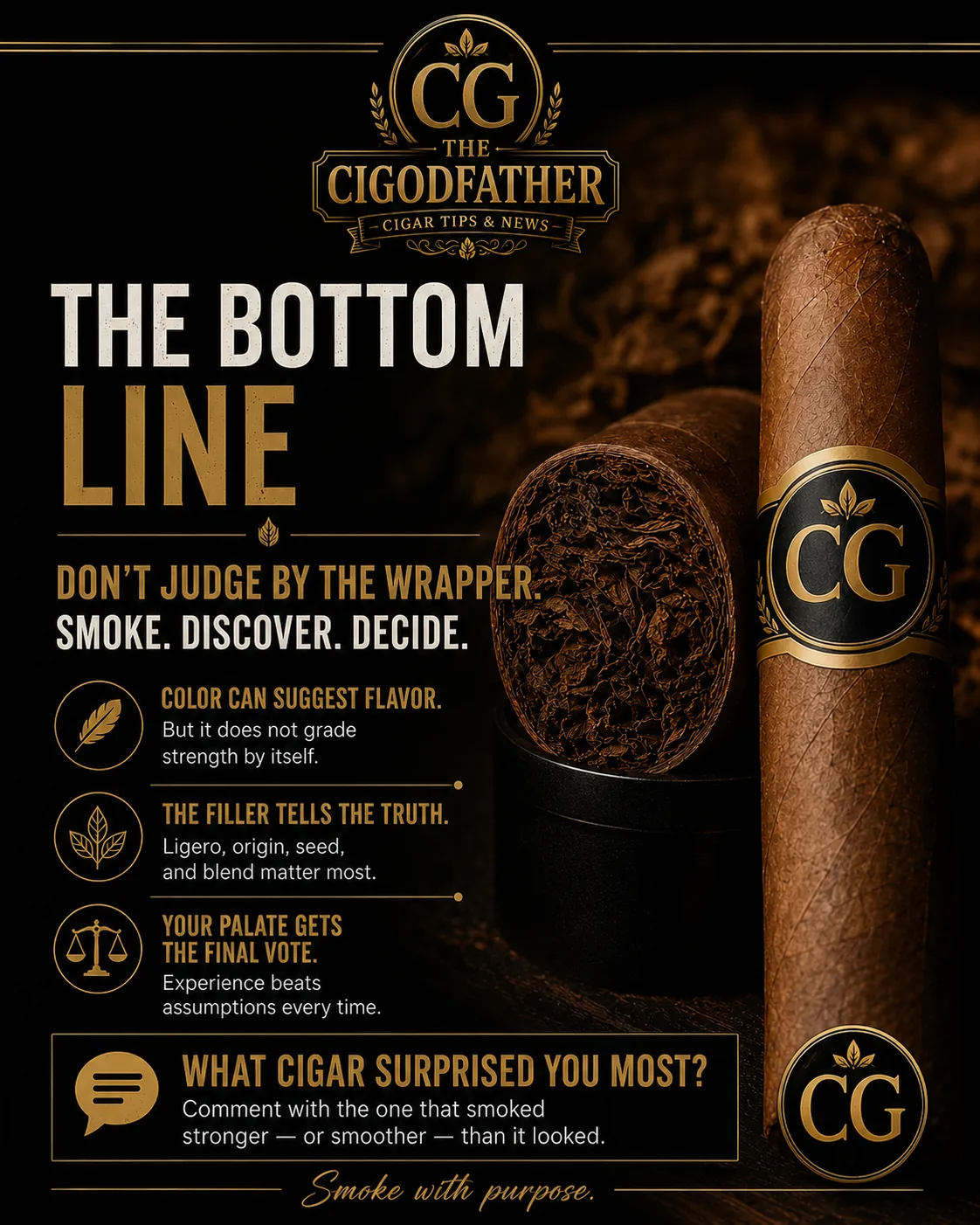
Color can suggest flavor, but it does not grade strength by itself. The filler tells the truth. And in the end your own palate gets the final vote — experience beats assumptions every single time.
No. Strength comes mainly from the filler blend inside — especially high-priming ligero — not the wrapper color. The fermentation that darkens a wrapper actually mellows it and turns harsh compounds into sugar, so a dark maduro is often sweeter and milder than it looks.
Flavor and style, not power. Darker leans toward cocoa, coffee, earth and sweetness; lighter leans creamier, brighter and sometimes spicier. It is a clue about the experience — confirmed only by the smoke.
Because of 1990s-boom fakes. Counterfeit “maduros” that were dyed or cooked instead of fermented smoked bitter and harsh, and smokers wrongly pinned that harshness on the color rather than the shortcut.